
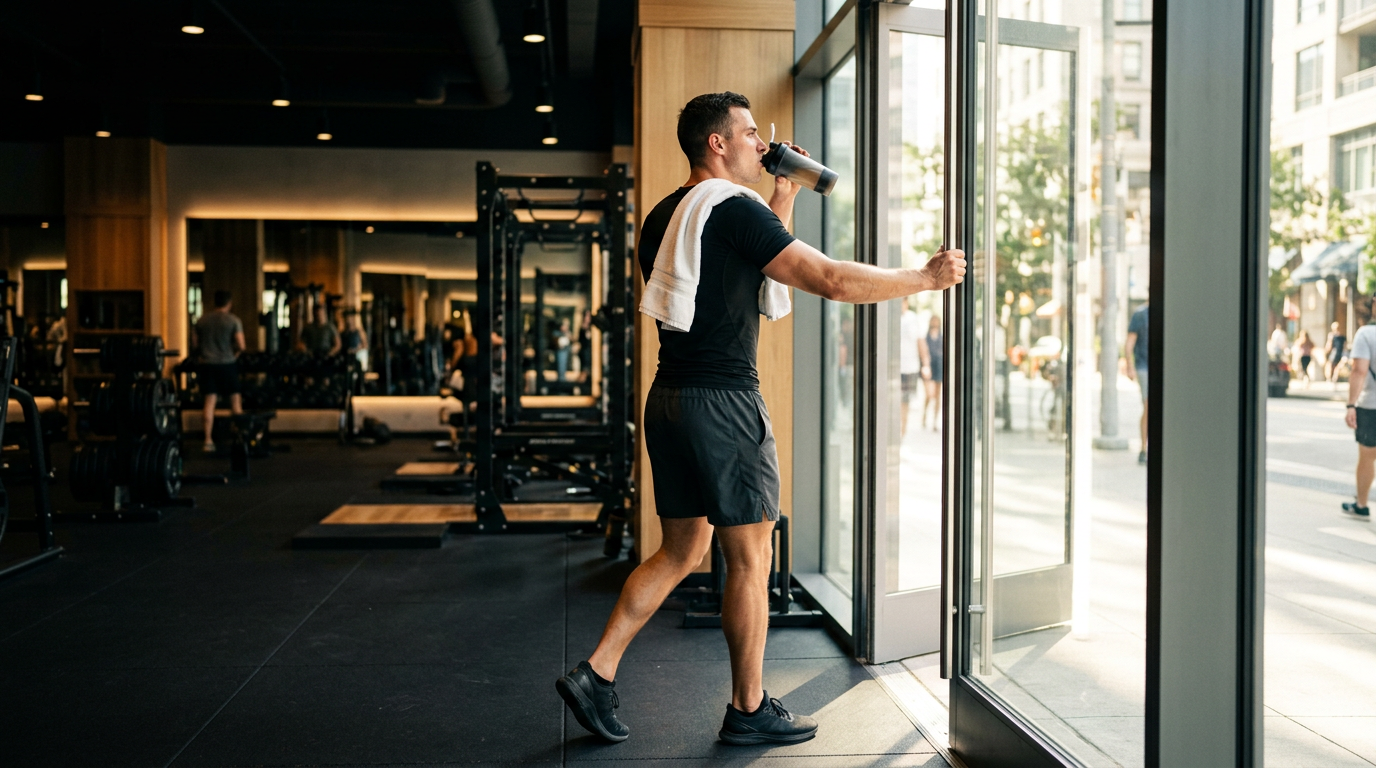
If you've spent any time around gyms or fitness content, you've almost certainly heard it: you have a 30-minute window after training to get protein in, miss it, and your session goes to waste. Grab your shake before the sweat dries, or don't bother.
Here's the thing: the research doesn't support that urgency. You do need protein after exercise, that part is true, but the window is far wider than gym culture suggests. For most people training recreationally, rushing a protein shake into the locker room matters far less than hitting your total daily protein intake and eating consistently across the day.
This article breaks down what the science actually says about post-workout protein timing, how the anabolic window myth took hold, how much protein you actually need, and what that looks like in practical, everyday terms.
The concept of the anabolic window has a reasonable scientific origin. Resistance exercise triggers muscle protein synthesis (MPS), the process by which your body repairs and rebuilds muscle tissue. Early research suggested that MPS peaks in the period immediately after exercise, and that consuming amino acids during this window would maximise the muscle-building response.
From there, the idea travelled from research papers into gym culture and was enthusiastically amplified by the supplement industry. Protein shakes became synonymous with the post-workout moment. The 30-minute rule became gospel.
The problem is that the research base has moved on significantly since those early observations and the picture is considerably more nuanced than a countdown clock.
A landmark meta-analysis by Schoenfeld, Aragon, and Krieger (2013), published in the Journal of the International Society of Sports Nutrition, analysed 23 studies examining the relationship between protein timing and muscle hypertrophy and strength. The conclusion: total daily protein intake had a significantly stronger association with muscle gains than the timing of protein consumption around training. The anabolic window exists, but it does not close after 30 minutes.
A follow-up review by Schoenfeld and Aragon (2018), published in the Journal of Orthopaedic and Sports Physical Therapy, clarified this further. The practical post-workout opportunity extends to several hours on either side of a training session. If you ate a protein-containing meal two hours before training, the amino acids from that meal are still in circulation as you exercise and into your recovery period. You do not arrive at the gym with an empty tank.
Research by Burd and colleagues (2011), published in the Journal of Nutrition, found that myofibrillar protein synthesis, the specific type of MPS that drives muscle adaptation, remains elevated for up to 24 hours following a resistance training session. Your muscles do not switch off their repair process the moment you leave the gym floor. The window is not a door that slams shut. It is a long, gradual slope.
A study by Areta and colleagues (2013), published in the Journal of Physiology, put protein distribution directly to the test. Participants consumed the same total daily protein amount in three different patterns during a prolonged recovery period: four doses of 20g, two doses of 40g, or eight doses of 10g. The group consuming four moderate doses of 20g showed significantly greater muscle protein synthesis compared with either the larger, infrequent doses or the smaller, more frequent ones.
The takeaway is clear: spreading protein intake across three to five meals throughout the day does more for muscle recovery and adaptation than any single well-timed post-workout bolus.
Before worrying about timing, it is worth establishing the right daily total. The International Society of Sports Nutrition position stand on nutrient timing (Kerksick et al., 2017) recommends that individuals engaged in regular resistance training aim for 1.4–2.0g of protein per kilogram of body weight per day, adjusted for training intensity and goals.
A systematic review and meta-analysis by Morton and colleagues (2018), published in the British Journal of Sports Medicine, found that protein supplementation beyond approximately 1.62g per kg of body weight per day provided no additional benefit for muscle mass or strength in healthy adults. For those in a caloric deficit or with very high training volumes, the evidence-based upper end sits around 2.2g per kg.
For a 70kg person training three to four times per week with a goal of building or preserving muscle, that is roughly 112–154g of protein per day, distributed across meals throughout the day.
The honest, evidence-based answer is: within a few hours, if you can. Not because the window slams shut at 45 minutes, but because eating a protein-containing meal after training is a sensible habit that supports recovery, manages hunger, and helps keep daily intake on track.
A reasonable target is 20–40g of protein within two hours of finishing your session. This amount is sufficient to maximally stimulate muscle protein synthesis in most individuals. Research consistently shows diminishing returns above 40g in a single sitting for the majority of recreational exercisers and the excess is not harmful, just not additionally productive for MPS in that moment.
Notice that protein shakes appear on this list, not at the top of it. Whole food sources produce the same muscle protein synthesis response as protein supplements when matched for leucine content and total protein. Supplements are convenient; they are not categorically superior. The best post-workout option is the one you will actually eat.
Slightly, but the difference is not dramatic for most people.
For someone primarily focused on building muscle, the guidance above applies directly: total daily protein and how it is distributed across meals matters most. Precise post-workout timing is a secondary concern.
For someone in a caloric deficit, protein timing carries slightly more relevance. Training in a fasted or semi-fasted state can increase the rate of muscle protein breakdown, and consuming protein promptly after a session can help attenuate this effect. In practice, this reinforces the same advice: aim to eat within two hours of training, prioritise your daily protein target, and structure meals so recovery nutrition does not get forgotten in a busy afternoon.
Apps like INCHECK FIT are built around exactly this kind of nuance, personalising daily intake targets to your specific goal and lifestyle, rather than applying a generic template and leaving you to figure out the rest.
The post-workout anabolic window is real. But it is measured in hours, not minutes, and for most people exercising three to four times per week, it looks like this in practice:
The urgency you have been sold was never primarily about science. It was about selling protein powder. The good news is that eating well consistently throughout the day is a far less stressful approach and the research backs it completely.
Last reviewed: April 2026 by the INCHECK FIT nutrition team.
